10

Experiments
Introduction
Classification
Time-multiplexing
Spatial codification
Direct codification
Time-multiplexing
•The
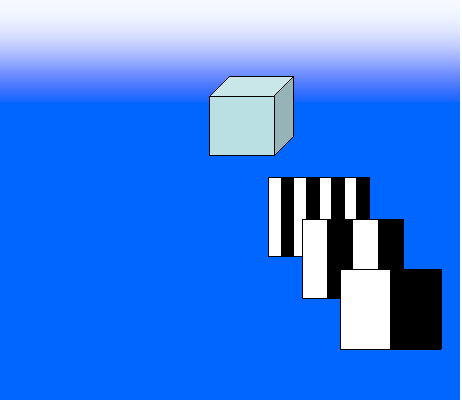
time-multiplexing paradigm consists of projecting a series of light patterns so that every encoded point is identified with the sequence of intensities that receives
•The most common structure of the patterns is a sequence of stripes increasing its length by the time à single-axis encoding
•Advantages:
–high resolution à a lot of 3D points
–High accuracy (order of mm)
–Robustness against colorful objects (using binary
patterns)
•Drawbacks:
–Static objects only
–Large number of patterns à High computing time


Pattern 1
Pattern 2
Pattern 3
Projected over
time
Example: 3 binary-encoded patterns which allows the measuring surface to be divided in
8
sub-regions
Conclusions
